
Service
Industrial Cleaning
Pressure washing, steam cleaning and preparation cleaning for industrial buildings, surfaces and production environments.

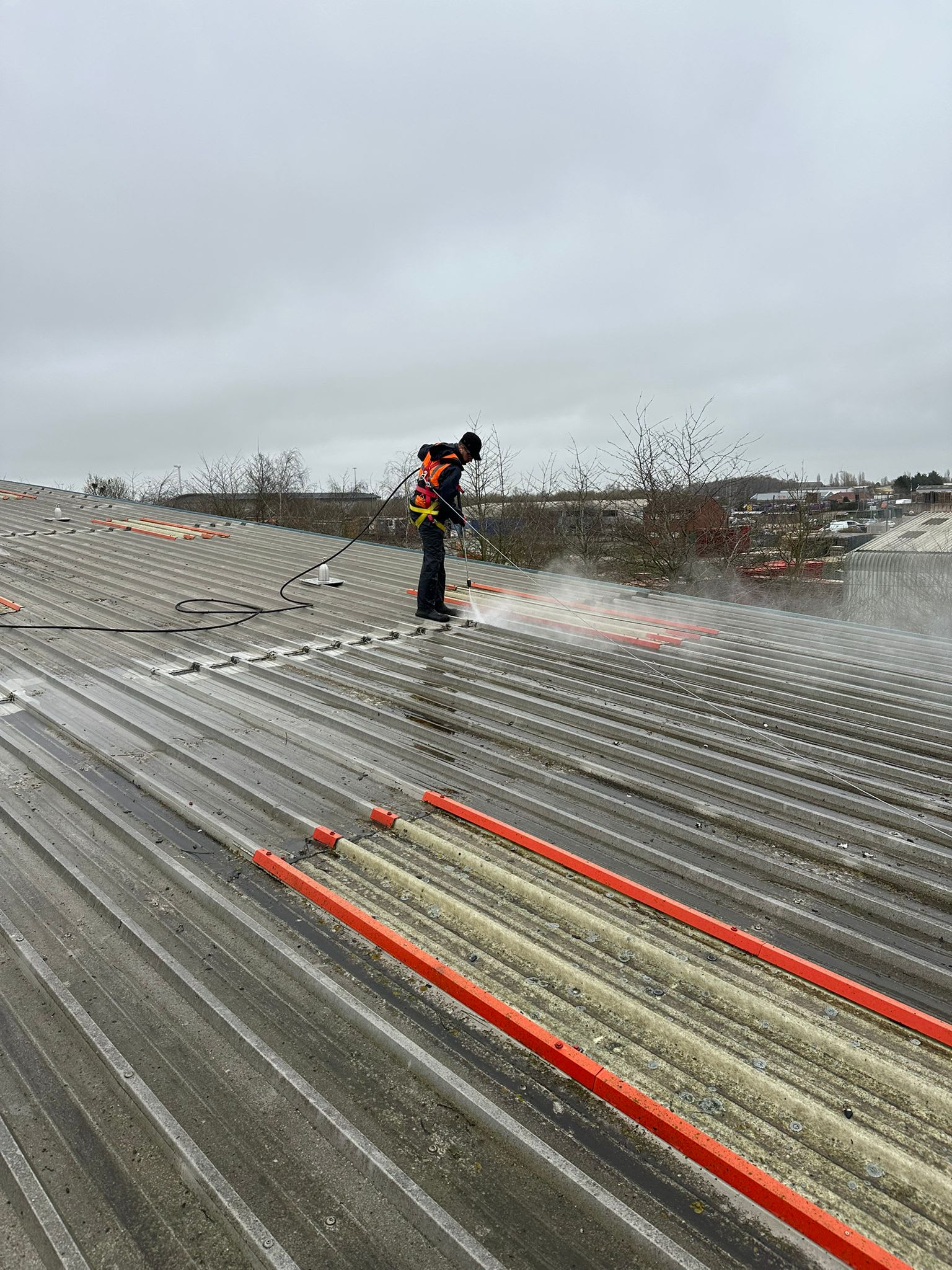
Pressure washing of profiled cladding on a live industrial site
Suitable buildings and surfaces
Cladding, elevations and soffits
Roofs, gutters and rainwater goods
Yards, service areas and hard standing
Production and process environments
Survey and preparation
- Step 01
Method assessment
Pressure, temperature and detergent are selected to suit the substrate without causing damage.
- Step 02
Containment planning
Run-off, drainage and adjacent operations are considered before cleaning starts.
- Step 03
Access arrangement
Reach, MEWP or platform access is confirmed against the elevation height and the ground conditions on site.
How the work is delivered
- D01
- Areas protected and drainage controlled
- D02
- Cleaning carried out to the agreed method
- D03
- Surfaces inspected and dried ready for coating where applicable
- D04
- Debris removed and the area handed back clear
 Featured project
Roof Clean - Failed Previous Repair
- Scope
- External roof clean
- Method
- Pressure wash
- Working pattern
- Fall arrest attached to anchor - 2900psi washer
Benefits
Appearance Restored
Appearance restored without unnecessary recoating
Proper Prep
Sound preparation where cleaning precedes a coating system
Schedule
Cleaning scheduled around shift patterns and deliveries
Run-off Controlled
Run-off and drainage controlled throughout the works
Common questions
Often yes, where the coating is intact. Where the coating has failed, a recoating scheme is set out instead.
Not when the method is correct. Pressure, temperature and detergent are matched to the substrate and the existing coating, and a test area is agreed before the main works begin.
Drainage routes are identified beforehand and protected or diverted as required, so run-off is contained and disposed of in line with the site's own arrangements.
Soft washing uses low pressure with a cleaning solution to lift dirt, algae and staining, and suits coated cladding, painted surfaces and anything fragile. Higher pressure is used where the substrate can take it and the soiling is heavy. The method is matched to the surface, not the other way round.
Access is confirmed at survey - MEWP, scaffold tower or reach-and-wash pole systems - and recorded in the method statement. Operatives hold IPAF and PASMA cards for the equipment used.
Yes, where the products, containment and timing are agreed with the site's own hygiene requirements first. Work of that kind is normally programmed into a shutdown or cleaning window.
Usually. Growth is removed at controlled pressure with gutters and outlets protected so debris does not simply move into the drainage. Where sheets or fixings are already deteriorated, that is reported rather than washed over.
Every two to three years keeps most industrial elevations in good order and stops staining becoming permanent. Sites near roads, farmland or dust-producing processes benefit from more frequent cleaning.
Where a coating is to follow, cleaning is part of the preparation and is specified to the coating manufacturer's requirements, so the surface is sound, dry and free of contamination before application.
Project duration depends entirely on the scale of the works - the area involved, access arrangements, the number of coats or stages, and drying times between them. Once a specification is agreed we confirm a programme in writing, and we hold slots for urgent or weather-critical work.
Accredited & trained





Discuss industrial cleaning for your site
Send us a brief description and photographs of the issue. We can review the information and arrange a site visit where required.
Based near Eye in Suffolk, J&L Maintenance supports commercial and industrial sites UK wide.
info@jandlmaintenance.co.ukContact details
- Address
- J&L Warehouse, Church Farm, Hoxne Road, Eye, Suffolk, IP23 7NJ
- Phone
- 07535 733 188
- Response
- Enquiries answered within one working day